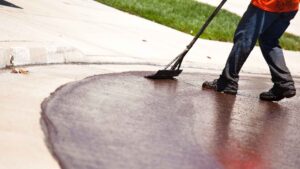
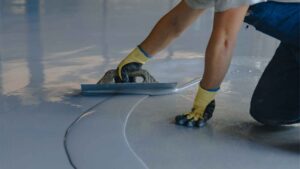
If your driveway, garage floor or patio is looking worn out, you may be wondering whether resurfacing is worth the money or whether you’re better off replacing the concrete altogether.
So, how much does concrete resurfacing cost?
There isn’t one fixed price that applies to every project in Australia. The size of the area matters, but so do the condition of the existing concrete, preparation required, repairs, resurfacing system, finish and access to the site.
That’s why two concrete surfaces of the same size can receive very different quotes.
The good news is that when the existing slab is structurally sound, resurfacing can be a practical way to restore it without the disruption and expense of completely replacing the concrete.
Concrete Resurfacing Cost at a Glance
The main factors that influence the cost are:
| Cost factor | Why it affects the price |
| Area size | More material and labour are required |
| Concrete condition | Damaged surfaces need more preparation |
| Surface preparation | Grinding and coating removal add labour |
| Repairs | Cracks, holes and spalling require additional work |
| Resurfacing system | Different systems have different material costs |
| Finish | Decorative and flake finishes can increase the price |
| Access | Difficult sites can take longer to prepare |
| Location | Travel and local labour costs can affect the quote |
If you’re looking for a concrete resurfacing price per square metre, remember that the rate alone doesn’t tell you what you’re actually getting.
A low per-metre price may exclude important preparation or repairs.
How Much Does Concrete Resurfacing Cost Per Square Metre?
Concrete resurfacing is often priced according to the size of the area, so cost per square metre is a useful starting point.
However, there isn’t a reliable single rate that applies to every Australian project.
A clean, structurally sound slab may need relatively straightforward preparation. An old garage floor covered in oil, previous coatings and damaged concrete can require considerably more work before anything new can be applied.
For example, imagine two 50 m² garage floors.
One has clean, sound concrete with minor surface wear.
The other has years of oil contamination, peeling paint, cracks and areas of spalling.
Although both are 50 m², they are not equivalent jobs.
The second floor needs substantially more preparation and repair, which is why using an online per-m² figure as a guaranteed final price can be misleading.
When comparing concrete resurfacing prices, look at what the price includes, not just the number beside “per m²”.
What Affects the Cost of Concrete Resurfacing?
1. Size of the Area
The obvious factor is the total area being resurfaced.
A larger driveway or commercial floor requires more material and labour than a small patio.
However, larger projects don’t always cost exactly the same per square metre as smaller ones. Equipment setup, preparation and other fixed tasks can sometimes be spread across a larger area.
So don’t assume you can simply multiply an advertised rate by your exact square metre measurement and get your final quote.
2. Condition of the Existing Concrete
This can have a major impact on the overall price.
Concrete with surface wear and minor cosmetic problems may require relatively straightforward preparation.
Older or heavily damaged concrete may need work to deal with:
- Cracks
- Spalling
- Holes
- Surface deterioration
- Previous coatings
- Uneven areas
- Oil contamination
The important question isn’t simply, “How big is the floor?”
It’s also, “What condition is the floor in?”
3. Surface Preparation
Preparation is one of the areas where quotes can differ significantly.
Depending on the existing surface, preparation may involve cleaning, degreasing, mechanical grinding, removal of old coatings and creating the appropriate surface profile.
This work isn’t something you want to cut out just to reduce the upfront price.
A resurfacing system needs a suitable substrate to bond to. If oil, grease, weak concrete or an unsuitable old coating remains underneath, the new surface may eventually peel, blister or delaminate.
In other words, preparation isn’t just an extra charge. It’s part of what you’re paying for.
4. Concrete Repairs
Cracks, holes and spalled areas may need to be repaired before resurfacing.
The amount of repair required depends on the severity and extent of the damage.
Minor repairs may have little effect on the overall project, while extensive damage can add significant labour and material costs.
It’s better to identify these issues before installation than to cover them and hope they disappear.
5. Type of Resurfacing System
“Concrete resurfacing” can refer to different systems and applications.
Depending on the project, options can include:
- Concrete overlays
- Polymer-modified resurfacing materials
- Epoxy coatings
- Polyaspartic systems
- Decorative resurfacing systems
These aren’t identical products.
A residential patio, garage floor, driveway and commercial workshop can have very different performance requirements.
The right system should be selected according to how the surface will be used and what conditions it will face.
6. Finish and Appearance
The finish you choose can also affect the cost.
A straightforward finish may be less involved than a decorative system with additional materials or texture.
Options can include:
- Solid colours
- Decorative finishes
- Flake flooring
- Textured surfaces
- Slip-resistant finishes
If you’re resurfacing a garage, for example, a decorative flake system may provide the appearance and texture you’re after.
For an outdoor driveway, slip resistance and weather exposure may be more important than achieving a highly polished appearance.
7. Site Access
Access is another factor that’s easy to overlook.
A large, open driveway with easy equipment access is different from a confined area where materials and equipment have to be moved through narrow spaces.
Stairs, tight entrances and difficult working conditions can increase labour requirements.
For projects outside major metropolitan areas, travel and location can also influence the final quote.
Concrete Resurfacing Cost by Project Type
Garage Floor Resurfacing
Garage floors often require more preparation than they initially appear to need.
Oil, grease, tyre marks, old coatings and years of accumulated dirt can all affect the substrate.
A garage also needs to withstand vehicle traffic, abrasion and regular cleaning.
The resurfacing system therefore needs to be chosen for the way the garage will actually be used, rather than simply based on appearance.
Driveway Resurfacing
Driveways tend to cover larger areas and are exposed to vehicles, rain, sunlight and changing weather conditions.
Drainage, surface texture and slip resistance all need consideration.
The condition of the existing driveway also has a major impact on the amount of preparation required.
Patio Resurfacing
Patios are often more appearance-focused, but they still need to cope with outdoor exposure and regular foot traffic.
A decorative resurfacing system can give an ageing patio a completely different appearance without removing the existing slab.
Commercial Concrete Resurfacing
Commercial floors can involve larger areas and more demanding conditions.
Workshops, storage areas and other commercial spaces may experience heavier traffic, equipment, abrasion or chemical exposure.
That can require a more robust flooring specification and more extensive preparation.
Is Resurfacing Concrete Cheaper Than Replacing It?
It can be, but resurfacing isn’t automatically the cheaper option.
If an existing slab is structurally sound and most of the problem is surface-level, resurfacing may avoid the demolition, removal and reconstruction involved in replacing the concrete.
But if the slab has severe structural damage, major settlement or ongoing movement, resurfacing may only hide the problem temporarily.
That’s where choosing the cheapest option can backfire.
You don’t want to spend money resurfacing a slab that should have been repaired or replaced in the first place.
The better question isn’t simply:
“Which option costs less?”
It’s:
“Which option makes the most sense for the condition of my concrete?”
Why Cheap Concrete Resurfacing Quotes Can Be Risky
A very low quote isn’t necessarily a bad quote. But it’s worth finding out what has actually been included.
Ask whether the price covers:
- Surface preparation
- Mechanical grinding
- Cleaning and degreasing
- Crack repairs
- Primer
- Resurfacing layers
- Topcoat
- Decorative finish
- Site preparation
- Final cleanup
Two contractors can quote very different amounts because they may be proposing different levels of preparation or different flooring systems.
The cheapest quote can become expensive if the surface fails and needs to be repaired or resurfaced again.
You’re not just paying for the material on top. You’re paying for the work that allows that material to perform properly.
How to Compare Concrete Resurfacing Quotes
When you receive quotes, don’t compare only the total figure.
Ask each contractor:
Is surface preparation included?
Are existing cracks and damaged areas included in the quoted work?
What resurfacing system will be installed?
How many layers are included?
Is the protective topcoat included?
What finish am I getting?
Are there additional charges for difficult access?
How long will the surface need to cure?
What maintenance will the finished surface require?
This gives you a much clearer picture of what you’re actually buying.
Can DIY Resurfacing Save Money?
Doing the work yourself can reduce labour costs, which is obviously appealing.
But the potential savings need to be weighed against equipment hire, material waste and the risk of getting the preparation wrong.
Grinding equipment, surface preparation, crack repair and product application all require the right approach.
A failed DIY resurfacing job can mean paying for materials twice and then paying someone to fix the surface.
For a small, straightforward project, DIY may be realistic for someone with the necessary experience.
For a large garage, driveway or commercial floor, professional preparation can be a worthwhile investment.
How to Get an Accurate Concrete Resurfacing Quote
Start by measuring the approximate area.
Take clear photos of the existing concrete and note any obvious:
- Cracks
- Holes
- Stains
- Previous coatings
- Spalling
- Uneven sections
Also explain how the area is used. A garage storing two cars has different requirements from a commercial workshop with forklifts and heavy equipment.
Most importantly, arrange an on-site assessment where possible.
A photo can show that concrete is stained. It can’t always reveal the full extent of contamination, surface weakness, moisture or adhesion problems.
An inspection allows the contractor to assess the substrate and recommend a suitable system rather than simply applying a generic price per square metre.
Is Concrete Resurfacing Worth the Cost?
Resurfacing can be worthwhile when the existing concrete is structurally sound and the main problem is surface condition or appearance.
It can make sense when you want to:
- Restore worn concrete
- Improve the appearance
- Avoid unnecessary demolition
- Extend the usable life of a sound slab
- Create a new finish
It may not make sense when the concrete has severe structural damage, extensive movement or significant settlement.
In those situations, replacement or more substantial repairs may provide better long-term value.
The goal isn’t to find the cheapest way to cover the concrete.
It’s to choose a solution that gives the existing slab the best chance of performing properly for years to come.
Final Takeaway
Concrete resurfacing costs vary because every existing slab starts from a different condition.
Area size matters, but preparation, repairs, resurfacing system, finish and access can all change the final price.
If your concrete is structurally sound, resurfacing can be a practical alternative to complete replacement. But don’t choose a contractor based purely on the cheapest price per square metre.
Find out what preparation is included, what system will be installed and whether the existing concrete is actually suitable for resurfacing.
A clear quote based on an assessment of the actual surface is far more useful than a cheap headline price that leaves important work out.
Frequently Asked Questions
Find answers to common questions about concrete resurfacing costs, pricing factors, repairs and choosing the right resurfacing option.