If you’re planning a bathroom renovation, you’ve probably spent plenty of time looking at tiles. But recently, another option has been gaining attention among homeowners and designers alike.
Epoxy flooring.
Traditionally used in garages, warehouses and commercial spaces, epoxy flooring is now making its way into modern homes, including bathrooms, laundries and ensuites. Its seamless appearance, easy maintenance and contemporary finish make it an attractive alternative to traditional tiles.
So, can epoxy flooring actually be used in a bathroom?
The answer is yes. When installed correctly, epoxy flooring is an excellent choice for bathrooms. It creates a durable, water-resistant surface with no grout lines to clean, making it both practical and visually appealing.
That said, not every epoxy flooring system is suitable for every bathroom. Factors such as slip resistance, waterproofing and professional installation all play an important role in achieving a safe, long-lasting result.
Let’s take a closer look at why more Australians are considering epoxy flooring for their bathrooms and whether it’s the right option for your home.
Why Homeowners Are Choosing Epoxy Flooring for Bathrooms
Bathrooms have changed a lot over the past decade.
Instead of purely functional spaces, they’re now designed to feel like an extension of the home, with clean lines, modern finishes and materials that are both attractive and easy to maintain.
Epoxy flooring fits perfectly into that trend.
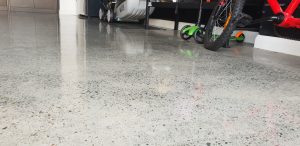
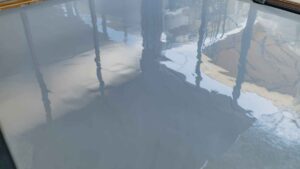
Unlike tiles, epoxy creates one continuous surface across the floor. There are no grout joints breaking up the design, giving the room a sleek and spacious appearance.
For many homeowners, that’s one of the biggest selling points.
Grout is often the first part of a tiled bathroom to show its age. It can become stained, discoloured and difficult to clean, even with regular maintenance.
Because epoxy flooring is seamless, there’s no grout to scrub or maintain.
Another reason people choose epoxy is its versatility. Whether you’re renovating a compact ensuite or a large family bathroom, epoxy is available in a wide range of colours and finishes to complement different interior styles.
From subtle neutral tones to decorative finishes that create a premium look, there are plenty of options available without relying on traditional tiles.
Is Epoxy Flooring Waterproof?
This is one of the first questions homeowners ask, and understandably so.
Bathrooms are exposed to water every single day, so choosing a flooring material that can handle constant moisture is essential.
When installed correctly, epoxy flooring forms a seamless, non-porous surface that resists water exceptionally well.
Unlike concrete, which naturally absorbs moisture, cured epoxy creates a protective barrier over the substrate, preventing water from soaking into the surface under normal use.
However, it’s important to understand that waterproof performance doesn’t depend solely on the epoxy itself.
A successful bathroom installation also relies on:
- Proper preparation of the concrete or existing substrate.
- Suitable waterproofing beneath the flooring where required.
- Correct detailing around drains, walls and fixtures.
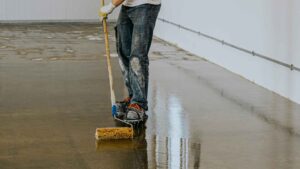
- Professional installation techniques.
If these elements are overlooked, problems can develop regardless of the flooring material being used.
That’s why epoxy should always be considered as part of the overall bathroom flooring system rather than simply a decorative coating.
Is Epoxy Flooring Slippery When Wet?
This is probably the biggest concern people have before choosing epoxy for a bathroom.
The answer depends on the finish you select.
A high-gloss, perfectly smooth epoxy surface can become slippery when covered with water, just as polished tiles or polished concrete can.
Fortunately, that’s not the only option available.
Professional epoxy flooring systems can include anti-slip additives or textured finishes that improve grip without dramatically changing the appearance of the floor.
The level of texture can also be adjusted depending on where the epoxy is being installed.
For example, a powder room with very little water exposure may require a different finish than a family bathroom that’s used several times a day.
The goal is always to strike the right balance between safety, comfort and appearance.
If young children, elderly family members or anyone with limited mobility regularly uses the bathroom, discussing slip resistance before installation is especially important.
A flooring system that looks great should also provide confidence every time someone steps out of the shower.
Can Epoxy Flooring Be Used Inside a Shower?
Yes, it can, but this is an area where professional installation becomes especially important.
A bathroom floor and a shower floor aren’t exactly the same. While both are exposed to water, showers experience constant moisture, direct water flow and require proper drainage.
For epoxy flooring to perform well inside a shower, several factors need to be considered:
- The floor must have the correct fall towards the drain.
- Waterproofing beneath the surface must comply with Australian building requirements.
- The epoxy system should be suitable for wet areas.
- A slip-resistant finish should be incorporated to improve safety.
Trying to install epoxy over an existing shower floor without addressing these factors can lead to problems later.
When installed as part of a properly designed bathroom renovation, however, epoxy can create a seamless shower floor that is both practical and visually striking.
Epoxy Flooring vs Bathroom Tiles
Tiles remain the most common bathroom flooring choice in Australia, but they’re no longer the only option worth considering.
Here’s how epoxy compares.
| Feature | Epoxy Flooring | Bathroom Tiles |
| Grout lines | None | Yes |
| Water resistance | Excellent when installed correctly | Excellent |
| Cleaning | Simple, seamless surface | Grout requires regular cleaning |
| Appearance | Modern, seamless finish | Wide range of styles and patterns |
| Maintenance | Low | Moderate |
| Slip resistance | Can be customised with anti-slip additives | Depends on tile selection |
| Repairs | Localised repairs possible in many cases | Individual tiles can be replaced if available |
| Lifespan | Long-lasting with proper installation | Long-lasting with proper installation |
Neither option is automatically better.
If you love the classic appearance of tiled bathrooms, tiles remain a great choice.
If you prefer a clean, contemporary look with minimal maintenance, epoxy flooring offers several advantages that many homeowners appreciate.
What Finishes Are Available?
One of epoxy flooring’s biggest strengths is its design flexibility.
Rather than being limited to one appearance, epoxy can be customised to suit different bathroom styles.
Some popular options include:
Solid Colours
Perfect for minimalist bathrooms.
Soft greys, whites, charcoal and warm neutral tones create a timeless appearance that pairs well with modern fixtures.
Decorative Flake Systems
Although commonly associated with garages, finer decorative flakes can also create subtle texture while helping disguise minor wear.
Metallic Epoxy
Metallic finishes create unique visual effects that resemble polished stone or flowing marble.
These systems are often chosen for feature bathrooms where appearance is a major priority.
Matte, Satin and Gloss Finishes
Many people automatically think of glossy epoxy, but that’s only one option.
Matte and satin finishes have become increasingly popular because they provide a softer appearance while reducing reflections and helping improve traction when combined with anti-slip additives.
Is Epoxy Flooring Suitable for Every Bathroom?
In many cases, yes.
Epoxy works particularly well in:
- Family bathrooms
- Ensuites
- Guest bathrooms
- Powder rooms
- Laundry and bathroom combinations
- Accessible bathrooms where a seamless floor is preferred
However, it’s important to recognise situations where additional planning may be required.
Bathrooms with significant structural movement, damaged concrete or existing waterproofing issues should have those problems addressed before any flooring is installed.
Similarly, if you’re planning a DIY installation without experience, bathrooms can be less forgiving than garages because waterproofing and drainage are much more critical.
How Long Does Epoxy Flooring Last in a Bathroom?
A professionally installed epoxy floor can last for many years in a residential bathroom.
Its lifespan depends on several factors, including:
- The quality of the epoxy system
- Surface preparation
- Waterproofing beneath the floor
- Daily use
- Cleaning and maintenance
- The protective top coat
Bathrooms generally experience lighter traffic than garages or commercial spaces, which often allows epoxy flooring to maintain its appearance for a long time.
Keeping the floor clean and following basic maintenance recommendations will help maximise its lifespan.
Looking After Your Epoxy Bathroom Floor
One of the reasons homeowners choose epoxy is because it’s relatively easy to maintain.
To keep it looking its best:
- Sweep or vacuum regularly to remove dust and grit.
- Mop using a mild pH-neutral cleaner.
- Wipe up soap residue and standing water when practical.
- Avoid abrasive scrubbing pads that may dull the finish.
- Inspect the floor periodically and refresh the protective top coat if recommended by the installer.
Unlike tiled floors, you won’t need to spend time scrubbing grout lines or dealing with grout discolouration over time.
Final Thoughts
So, can epoxy flooring be used in a bathroom?
Yes. When installed correctly, epoxy flooring is a durable, water-resistant and low-maintenance option that suits many modern bathrooms.
Its seamless finish, lack of grout lines and contemporary appearance make it an appealing alternative to traditional tiles, particularly for homeowners looking for a clean, minimalist design.
Like any flooring material, success depends on proper installation. Waterproofing, drainage, slip resistance and surface preparation all need to be considered to ensure the floor performs as intended.
If you’re planning a bathroom renovation and want something that’s both practical and visually distinctive, epoxy flooring is certainly worth considering. With the right system and professional installation, it can provide a stylish surface that continues to perform well for many years.
“`htmlFrequently Asked Questions
Find answers to common questions about using epoxy flooring in bathrooms, including waterproofing, tiles, slip resistance and durability.